
Let’s take a moment to imagine you’ve just built a ₹5 crore investable corpus.
As an NRI living in London, New York, or Singapore, your first instinct might be to put it into a luxury property. But where would you invest?
Would you go back home? Buy a premium 3BHK in Mumbai’s Lower Parel or a tech-hub villa in Bengaluru’s Indiranagar?
Or, would you consider Dubai?
If India is your first choice, ask yourself once: are you investing in properties out of strategy or pulling by emotion?
It’s understandable if India feels like a safer homely connection. But when a 30% tax bracket cuts into your rental income, or your net yield settles around 2.5%, will it still feel like the right decision?
At this point, Dubai might start to look more attractive.
But don’t rush into it.
This blog is curated to give you a reality check when you juggle between “emotional investment” and “mathematical clarity”. Let us clarify!
Why Are NRIs Shifting Real Estate Investments to UAE?
There are ample reasons. Let’s disclose one by one!
1. The Capacity to Generate Higher Rental Yield
When we talk about property investment in Dubai, UAE vs Bengaluru or Mumbai, India, the conversation begins and ends with cash flow. The potential opportunities to gain higher rental yield is one of the reasons.
In India’s top tier-1 cities’ like Bengaluru Mumbai, the “Price-to-Rent” ratio is arguably broken. You might buy a property for ₹5 crore, but the monthly rent struggles to cross ₹1.25 lakh.
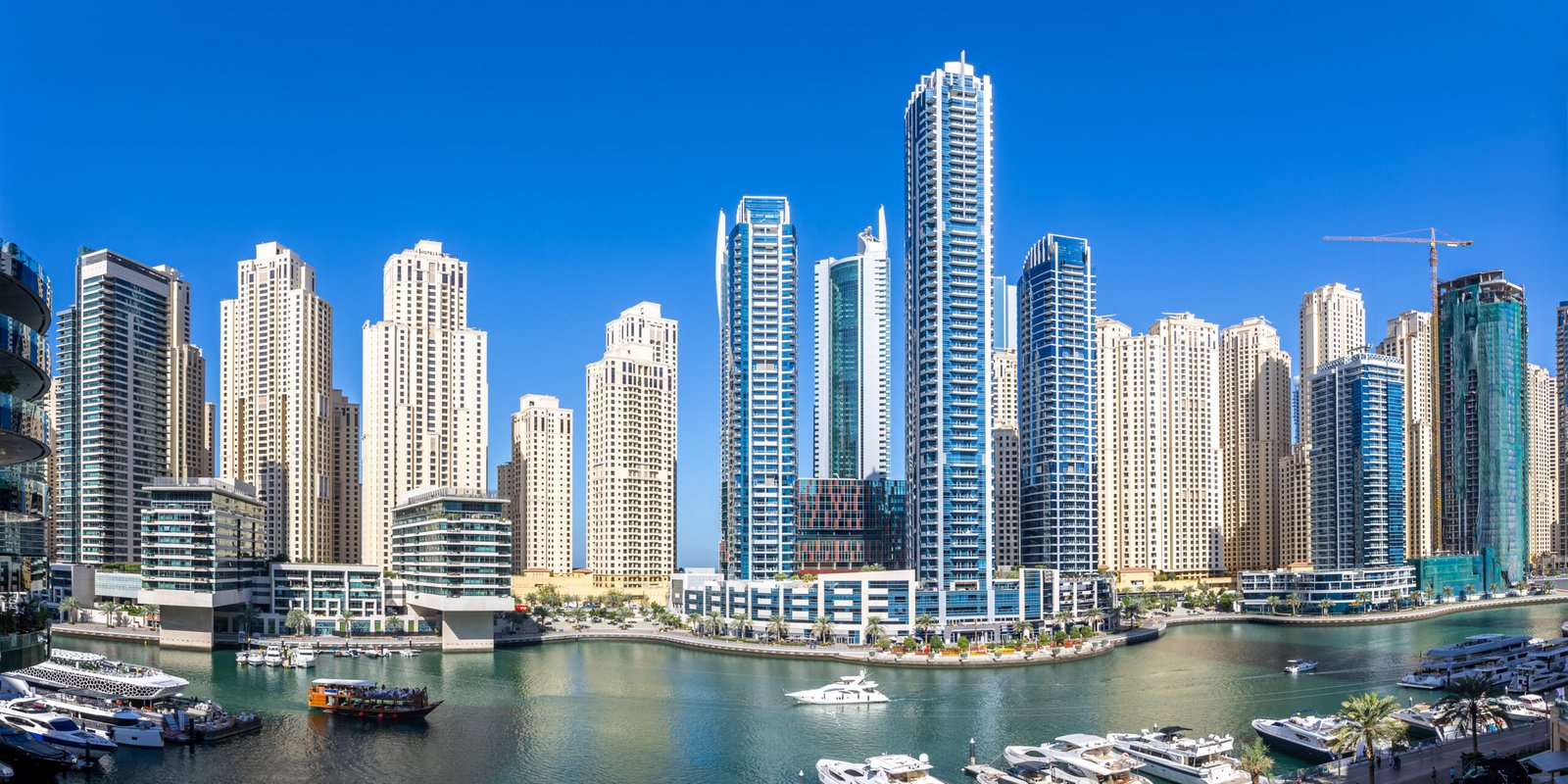
Now, compare this to Dubai’s ready properties in Shobha Hartland in MBR. Or else, you can take other high-growth pockets like Jumeirah Village Circle (JVC), Dubai Marina, or Arjan. Their gross rental yields are comfortably sitting between 7% and 9%. And, it has the potential to reach 11%.
City | Prime locations | Avg. Price per sq. ft. (AED) | Estimated gross rental yield |
Dubai | Downtown Dubai, JVC, Business Bay, Palm Jumeirah, etc. | AED 1,930 – AED 3,767+ | 7-11% |
Mumbai | South Mumbai, Bandra (W), Worli, BKC, Lower Parel, etc. | AED 1,750 – AED 4,680+ | 2.5-4% |
Bengaluru | Sadashivanagar, Koramangala, Indiranagar, Whitefield, etc. | AED 700 – AED 1,150+ | 3.5-5.5% |
From here, it’s clear that, when you’re investing in properties,
- In Dubai, a ₹5 crore investment (approx. AED 2.2M) can potentially generate roughly ₹38-42 lakh annually.
- In India, the same investment in a Tier-1 city can drive roughly around ₹12-15 lakh annually.
Therefore, over a 10-year horizon, your investment in Dubai can effectively earn back nearly 80% of the principal through rent alone. Whereas in India, you are banking entirely on speculative capital appreciation to break even.
2. Free From the Obligation of Taxation
Another biggest reason for the massive shift from India to Dubai real estate investment is the UAE’s fiscal simplicity. For an NRI, the Indian tax slabs have become increasingly a hard nut to crack. That’s exactly what can take you away too.
Property tax type | India | Dubai |
Rental income tax | 31.2% (Flat TDS for NRIs) | 0% |
Capital gain tax (LTCG) | 12.5% (No indexation benefits) | 0% |
Purchase levy | Stamp Duty (5-7%) + Registration fee (1%) | DLD Fee (4%) |
Annual property tax | Municipal Tax (Recurring, varies) | None |
Municipality fee | N/A (Included in property tax) | 5% of Annual Rent (via DEWA bill) |
Property maintenance fee | 18% (If monthly bill > ₹7,500) | 5% VAT on Service Charges |
Other fees (Under construction) | 5% (Standard) or 1% (Affordable) as GST | 0% (Residential is exempt) |
TDS on sale or exit | 12.5% to 30% (Withheld by buyer) | None |
Let’s understand how this taxation is executed:
Phase 1: Under construction
Let’s say you buy a property in Dubai which is an under construction villa or apartment. No matter, if this property is a new one or the part of a reselling piece, the entire process remains VAT exempted.
In contrast, to buy an under constructed property in India, you must pay 5% GST on the construction value. Though it doesn’t add any extra value to your home.
Phase 2: Purchase
In India, the Revenue Department of the State charges stamp duty based on the property value, which increases your purchase amount entirely. For example, if you buy a ₹5 crore property in Mumbai, you might pay ₹25-30 lakh in taxes. You’ve to close the deal before getting your keys in hand.
Contrary to it, 4% Dubai Land Department (DLD) fee charges as a one-time payment by the Dubai government. However, you don’t need to pay for it all. Instead, it splits between you and the seller.
Phase 3: Recurring cost
In India, you need to pay Municipal Property Tax every year to the local city corporation. Additionally, if your luxury society maintenance exceeds ₹7,500/month, you are hit with an extra 18% GST on that bill.
In Dubai, there is a 5% Municipality Housing Fee. But it is only calculated on the property’s rental value. If you live in it or it’s vacant, this is often waived or minimal. The main recurring cost is the property maintenance service charges, which covers luxurious, smart, and modern amenities.
Phase 4: Exit
As an NRI, when you sell property in India, the buyer is legally required to deduct TDS under Section 195. This TDS is taxed on your total sale value. However, to lower the withhold amount with the buyer, you can apply for a “Lower Deduction Certificate” via the TRACES portal. While it generally takes 21-45 days to get the certificate, your TDS amount can be frozen with the government until you file the tax return.
Additionally, even after the tax is settled, moving the money out of India is governed by the RBI’s Foreign Exchange Management Act (FEMA).
- As an NRI, you can generally repatriate up to USD 1 million per financial year from your NRO account. If your property sale nets you more than this (approx. ₹8.4 Crore+), you cannot move the full amount at once without specific RBI approval.
- To wire the money out of India, your bank will demand:
- Form 15CA: A self-declaration of the remittance.
- Form 15CB: A certificate from a Chartered Accountant confirming all taxes are paid.
- Source Proof: Original purchase and sale deeds to prove the funds weren’t “gifted” or “inherited” in a way that restricts repatriation
On the other hand, Dubai doesn’t charge you with any withholding tax. There’s no capital gain tax – 100% of your profit stays in your pocket. And, the UAE has no repatriation limits as every Dirham is pegged to the USD.
3. The Golden Visa as An Added Facility
This is where the UAE has played a masterstroke against the Indian real estate market. It shows why NRI buyers get attracted to Dubai property.
By purchasing a property in Dubai which is worth at least AED 2 million (roughly ₹4.5 Crore), you can qualify for the 10-year Golden Visa. How does it add an advantage?
- You can sponsor your spouse, children, and even domestic staff.
- Even if global markets fluctuate or your employment status in your current country changes, you have an immediate, high-standard “Plan B” waiting for you.
- Unlike traditional work visas, the Golden Visa makes you your own sponsor, providing a level of autonomy that no Indian property investment can match.
4. Transparency & Tech to Manage Asset
Ask any NRI about their process to find a suitable Indian property in tier-1 metro cities like Mumbai or Bengaluru. Chances are higher, you may listen about trust deficit.
But in Dubai, it’s not the case. From finding a reliable property management service firm to the digital-first approach of the Dubai Land Department (DLD), the UAE has built an ecosystem designed for the remote owner like NRIs.
Feature | India (RERA Model) | Dubai (Blockchain/DLD Model) |
Transaction ledger | Paper heavy | Public blockchain |
Escrow protection | 70% of funds; varying state enforcement | 100% of funds remain with buyer’s escrow account |
Remote management | Requires “Power of Attorney” (PoA) or Physical visits | Manage by Dubai REST App |
Off-plan safety | Legal snags are very often and common | Drone-verified construction milestones |
How to Start Your Dubai Property Investment Journey (The Right Way)?
Now, you may understand why Dubai can be your go to destination over India. If you’re ready to buy, sell, rent, or lease property in Dubai, don’t just get impressed by glossary. To enter into the market you need a practical strategy.
First, you should look for firms like GlobeNest Properties who have a track record of handling NRI portfolios specifically. We know how repatriation of funds, mortgage consultancy, and any other legal nuances work in the India-UAE corridor.
Second, if you want immediate cash flow from rental yields, you can look at ready properties in Business Bay or Marina. If you want maximum capital appreciation, look at off-plan property launches in Dubai South or the Islands.
Next, don’t overlook the developers with high handover ratings to ensure your 10-year visa eligibility remains intact.
Final Thought!
India will always be the emotional choice for an NRI. It is the land of your roots, and for a primary home to retire in, it remains unbeatable. However, for a Dubai investment property play, the UAE is simply the more efficient wealth generator.
With 9-11% yields, 0% tax, Golden Visa, and integrated smart urban planning Dubai has transformed the future of tech powered real estate landscape. From a transient workspace into a permanent wealth vault for the global Indian like you.
If you want to be a part of this smart financial evolution, you can book your free consultation with GlobeNest Properties now.
FAQ
Yes. For example, luxury properties in Dubai Marina often range between 1,365 - 2,145 AED. In India, a sea-facing unit in Mumbai’s Worli can cost you above 3,510 AED.
Yes. If you invest at or above AED 2 million, you’re eligible to get a Golden Visa.
The UAE Dirham is pegged to the USD. Even if the market fluctuates, your Dubai property value doesn’t affect. While in India, you can see the annual depreciation.
Dubai charges 0% tax, while India may tax you global income. Property Management firms in Dubai provide digital statements that make international filing seamless.
Yes. Unlike India’s FEMA rules, the UAE has no capital repatriation limits. You can move 100% of your funds back to India or any global account instantly.